Aligned-ish journal
What to Do When You Don't Know What's Next
You don't need to have your whole life figured out. You just need somewhere to begin.
By Andrew Voss6 min readLast updated
There are moments in life when the answer isn't obvious.
You know something needs to change, but you don't know what.
You feel ready for something different, but you couldn't tell someone exactly what "different" looks like.
Maybe you're questioning your career.
A relationship.
Where you live.
What you want.
Or maybe nothing is particularly wrong. You just have this feeling that the life you're living doesn't quite fit the way it used to.
And then comes the question:
So...what am I supposed to do now?
If you don't have an answer, that doesn't mean you're failing.
It might just mean you're in the space between what you've known and whatever comes next.
And that can be an uncomfortable place to be.
Why not knowing what's next feels so uncomfortable
Most of us like certainty.
We like plans.
We like knowing that if we do A, B, and C, we'll eventually arrive at D.
But life doesn't always work that way.
Sometimes you outgrow something before you know what should replace it.
You realize a job isn't working before you know what career you want.
You recognize that a relationship needs to change before you know what that change should look like.
You realize you've been living on autopilot before you know what you actually want instead.
That's where people often get stuck.
Because when the entire path isn't visible, doing nothing can feel safer than taking the wrong one.
You might be asking yourself a question that's too big
Think about this question:
What should I do with my life?
That's enormous.
You're asking yourself to make sense of your career, relationships, finances, purpose, happiness, identity, future and probably the next several decades all at once.
No wonder you don't have an answer.
Try making the question smaller.
Instead of:
What should I do with my life?
Try:
What isn't working for me right now?
Instead of:
What career am I supposed to have?
Try:
What do I want more of in my work?
Instead of:
Where should I be in five years?
Try:
What would make the next six months feel meaningful?
Smaller questions don't give you smaller lives.
They just give you somewhere to start.
Start with what you already know
When you don't know what you want, it can help to stop forcing yourself to come up with the perfect answer.
Start with what you already know.
Ask yourself:
What am I tired of?
What do I want less of?
What do I miss?
What have I been tolerating?
When do I feel most like myself?
You might not know exactly what you want next.
But you probably know more about what isn't working than you think.
And that information matters.
Sometimes clarity starts with elimination.
Pay attention to what keeps coming back
There are thoughts we have once.
And then there are thoughts that keep showing up.
Maybe you've been thinking about changing careers for two years.
Maybe you keep imagining yourself living somewhere else.
Maybe you continually tell yourself that you're going to make more time for something you love.
Maybe there's a conversation you've rehearsed in your head twenty times but never actually had.
You don't have to immediately act on every recurring thought.
But you should probably pay attention to it.
Ask yourself:
What idea, desire or frustration keeps coming back even when I try to ignore it?
Then ask:
Why might this keep getting my attention?
You aren't committing to anything.
You're just listening.
Stop waiting to feel completely sure
One of the easiest ways to stay stuck is to believe that eventually you'll wake up and suddenly know exactly what to do.
Sometimes that happens.
Often, it doesn't.
Clarity isn't always something you find before you move.
Sometimes clarity comes because you moved.
You take a class.
Have a conversation.
Visit a city.
Apply for something.
Try a hobby.
Meet someone new.
Say no to something.
Say yes to something.
And suddenly you have information you didn't have before.
You learn:
I liked that.
Or:
I definitely don't want that.
Both are useful.
You don't have to make a permanent decision.
You can run an experiment.
Ask yourself what you would try if it didn't have to work
This question can tell you a lot:
If I knew I could change my mind later, what would I be willing to try?
Not:
What should I commit to for the rest of my life?
Just:
What would I try?
Maybe you'd take a class.
Apply for a different job.
Start writing.
Travel somewhere alone.
Join a group.
Start a side project.
Have the conversation.
Try therapy.
Take a month away from dating.
Spend more time outside.
Whatever comes up, don't immediately turn it into a five-year plan.
Just notice it.
Choose curiosity over pressure
When you don't know what's next, pressure usually sounds like:
I should know this by now.
Everyone else seems to have it figured out.
I'm running out of time.
I need to make a decision.
Curiosity sounds different.
I wonder what would happen if...
What would I like to learn more about?
What haven't I tried yet?
What feels interesting to me right now?
Pressure demands an answer.
Curiosity gathers information.
And when you're unsure, information is incredibly valuable.
Give yourself a shorter timeline
You don't need to decide what the next ten years look like.
Try the next 30 days.
Ask yourself:
Over the next 30 days, what is one thing I want to explore?
Not accomplish.
Not master.
Not turn into your new identity.
Explore.
Maybe you schedule one conversation with someone who has a career you're curious about.
Maybe you try four yoga classes.
Maybe you spend Saturday mornings writing.
Maybe you tour apartments in another city just to see how it feels.
Maybe you finally research the thing you've been thinking about for months.
At the end of those 30 days, ask:
What did I learn about myself?
Then decide what the next experiment should be.
That's movement.
Try this when you feel completely lost
Take out a piece of paper and make three columns.
At the top, write:
I want less of...
Write whatever comes to mind.
Then:
I want more of...
Don't worry about whether it's realistic yet.
And finally:
I'm curious about...
This one matters.
You aren't promising to do anything.
You're simply noticing what gets your attention.
When you're finished, look across all three lists.
Ask yourself:
What is one thing here that I could explore this month?
Circle it.
That's enough.
Remember This
You don't have to know what's next before you start moving.
You don't need the five-year plan.
You don't need absolute certainty.
And you don't need to make one giant decision that fixes everything.
Sometimes the next chapter starts much more quietly than that.
A question.
A conversation.
An experiment.
A small decision.
A little more honesty about what you want.
You might not know exactly where you're going yet.
But you can still take the next step.
Feeling unsure about what comes next?
If your thoughts feel scattered and you need somewhere smaller to begin, The 10 Minute Reset is a free guided reflection designed to help you clear some of the noise, figure out what's taking up space and choose one next step.
Try the Free 10 Minute Reset
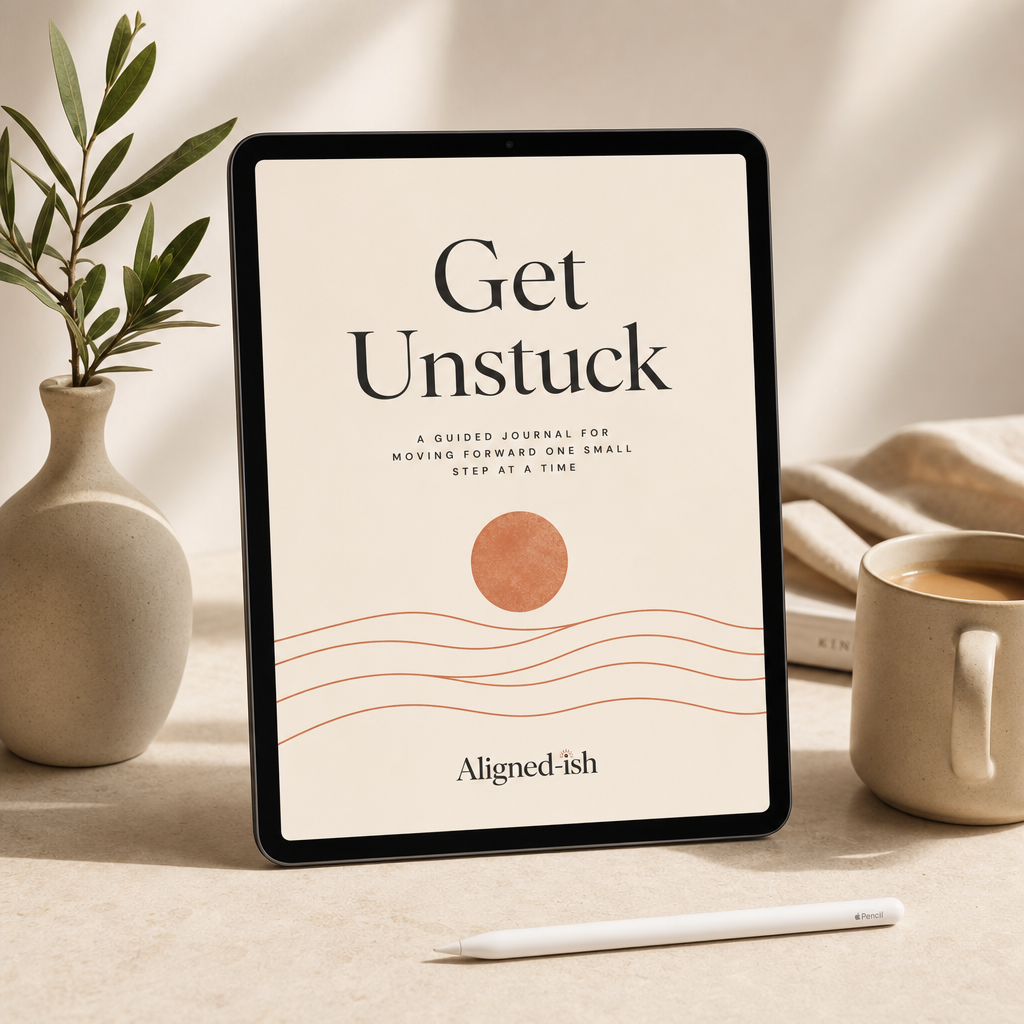
And if you're ready to go deeper, Get Unstuck is a 55-page guided journal that walks you through slowing down, noticing what's happening, understanding what's keeping you stuck, moving forward and learning to trust yourself again.

Andrew Voss
Certified Life Coach · Founder of Aligned-ish
I write about the quieter side of change: noticing what's off, telling yourself the truth, and taking one honest step.
Need a few quiet minutes to sort through it?
If this article stirred something up, the free 10 Minute Reset is a short guided reflection to help you check in, clear some of the noise, and choose one next step. And if you want to go deeper, Get Unstuck is the full 55-page guided journal.
Related articles
- Why Do I Feel Stuck in Life Even When Everything Looks Fine?
- 7 Signs You're Living on Autopilot
- The Difference Between Feeling Stuck and Being Burned Out
Coming soon
- How to Stop Overthinking
- Questions to Ask Yourself When You Feel Lost